
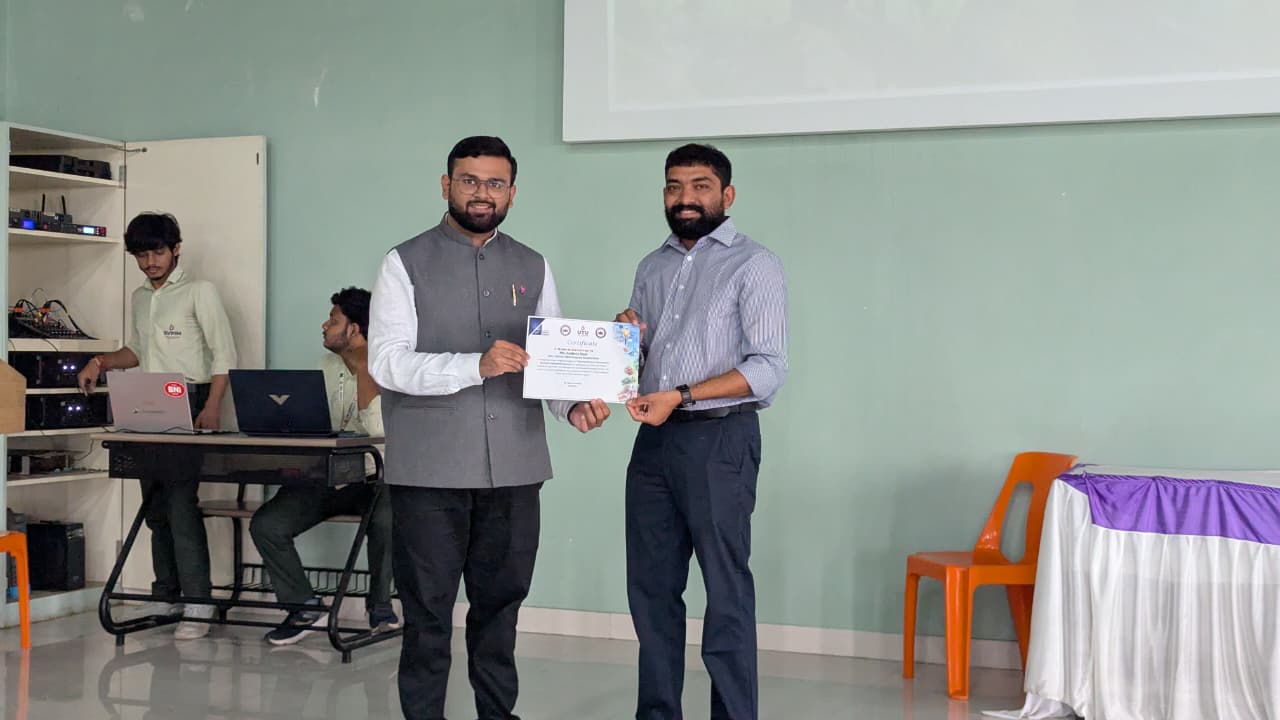
Maliba Campus witnessed an inspiring session that brought together the worlds of trekking, entrepreneurship and management as Giritvaa Founder Vaibhav Naik facilitated an engaging session for BBA and MBA students on “From Mountains to Management: Business Lessons from Trekking.”
The session explored how experiences on a trekking trail can translate into valuable lessons for the corporate world. Rather than viewing trekking simply as an adventure or physical activity, the session highlighted the mountain as a powerful learning environment where leadership, teamwork, decision-making, resilience and adaptability are tested in real time.
For management students, the connection is particularly relevant. In business, just as on a mountain, the path is rarely predictable. A trek requires participants to plan their route, manage limited resources, respond to changing conditions and work together to reach a common goal. Similarly, business leaders must make decisions with limited information, manage teams through challenges and adapt when circumstances change.
What Can a Trek Teach a Future Manager?
Leadership:
On a trek, leadership is not about simply giving instructions. It is about taking responsibility, supporting the team and making the right decisions when the situation becomes difficult. These are the same qualities required of effective business leaders.
Teamwork:
A mountain journey cannot always be completed alone. Participants learn to trust one another, communicate clearly and support teammates who may be struggling. In the workplace, strong collaboration can make the difference between a team that simply works and one that succeeds.
Decision-Making Under Pressure:
Weather, terrain, fatigue and unexpected obstacles can change a trekking plan. Trekkers must assess the situation and decide whether to continue, change the route or stop. Business leaders face similar situations where decisions must often be made without having all the answers.
Resilience:
A summit is reached one step at a time. Trekking teaches participants to keep moving despite exhaustion, setbacks and uncertainty. For future entrepreneurs and managers, this resilience is essential because business growth also comes with failures, challenges and unexpected turns.
Planning & Execution:
Every successful trek requires preparation — understanding the route, managing resources, assessing risks and coordinating the team. These principles closely mirror business planning, project management and execution.
Why Does Trekking Matter for Management Students?
Management education often focuses on theories, case studies and classroom discussions. Trekking adds another dimension: learning by doing.
On a trail, leadership cannot remain theoretical. Students experience the consequences of their decisions, communicate under pressure and understand the importance of collective responsibility. This kind of experiential learning can help students connect management concepts with real-world situations.
For BBA and MBA students preparing to enter a competitive professional environment, such experiences can build qualities that go beyond academic knowledge — confidence, adaptability, problem-solving ability, communication and the ability to work effectively with people.
From the Trail to the Boardroom
Through the session, Vaibhav Naik demonstrated that the lessons learned while climbing a mountain can extend far beyond the trail.
A mountain teaches you to plan the journey.
A team teaches you to lead together.
A difficult trail teaches you to adapt.
And the summit teaches you that meaningful goals are achieved one step at a time.
The interaction at Maliba gave students an opportunity to look at trekking from a completely different perspective — not merely as adventure, but as a practical classroom for leadership and management.
For Giritvaa, experiences like these reflect its broader belief that trekking can create meaningful connections with nature, communities and oneself.
From Mountains to Management, the message was simple: the skills that help you reach a summit can also help you build a successful career.

Trekking and Adventure Writer