
Planning Your Next Trek?
Our experts will guide you every step of the way.
Get in Touch with Our Trek Expert
Trek Fee
EX.
Loading rental items...
Select Number of Seats
SELECT DATE TO REGISTER - 2026
About Roopkund Trek
Roopkund Trek - The magic and mystery of the most popular Himalayan trek
Quick Itinerary
Day 1: Rishikesh to Wan Village
Drive: 250 km | Duration: 9 hours | Altitude: approx 8,000 ft Scenic drive through Devprayag, Rudraprayag, and Karnprayag, witnessing the confluence of sacred rivers. Arrival at the base camp, Wan Village.
Day 2: Wan Village to Gairoli Patal
Trek: 9 km | Duration: 4-5 hours | Altitude: approx 9000 ft | Altitude gain: 1,000 ft The trail gradually ascends, offering breathtaking vistas of the surrounding mountains. Your destination, Gairoli Patal, is a charming campsite surrounded by oak trees, providing a perfect base for the next leg of your journey.
Day 3: Gairoli Patal to Abin Kharak
Trek: 4 km | Duration: 3-4 hours | Altitude: approx 11,600 ft | Altitude gain: approx 2600 ft Today, you explore the mesmerizing Aali Bugyal, a vast expanse of alpine meadows carpeted with wildflowers. Stay at Abin Kharak for the night, allowing your body to acclimatize to the increasing altitude.
Day 4: Abin Kharak to Patarnachauni
Trek: 7 km | Duration: 4-5 hours | Altitude: approx 13500 ft | Altitude gain: approx 2,100 ft Prepare to be enchanted by Bedni Bugyal's mesmerizing beauty. The trail offers stunning views of the Himalayan giants, including Trishul, Nanda Ghunti, Chaukhamba, and Neelkanth. Your campsite at Patarnachauni provides a comfortable base to rest and rejuvenate.
Day 5: Patarnachauni to Bhagwabasa
Trek: 5 km | Duration: 4-5 hours | Altitude: 15500 ft | Altitude gain: approx 2,000 ft Make your way to Bhagwabasa. The trail becomes steeper and the air thinner, testing your endurance. However, the reward is unparalleled—the breathtaking panorama of snow-capped peaks that unfold before you.
Day 6: Bhagwabasa to Roopkund Lake and back to Patarnachauni
Trek: 12 km | Duration: 8-9 hours | Altitude: 15,500 ft The final ascent to Roopkund Lake, a glacial marvel shrouded in mystery. After exploring the lake, retrace your steps to Bhagwabasa and descend to Patarnachauni for the night.
Day 7: Patarnachauni to Wan Village
Trek: 14 km | Duration: 5-6 hours | Altitude loss: 7,500 ft Descent through Bedni Bugyal to Wan Village. The trail offers one last opportunity to soak in the breathtaking scenery with dinner before concluding your adventure.
Day 9: Departure
Your Roopkund Trek comes to an end. As you depart after a hearty breakfast, you carry with you memories of a lifetime forever etched in your heart.
Photo Gallery of Roopkund Trek
Detail Itinerary
Day 1: Rishikesh to Wan Village
Drive distance: 250 km | Drive duration: Approximately 9 hours | Altitude gain: 8000 ft (2438 m). Your adventure begins with a scenic drive from Rishikesh, a spiritual hub nestled on the banks of the Ganges River. As you journey through the Garhwal Himalayas, the landscape undergoes a dramatic transformation. Witness the confluence of the Bhagirathi and Alaknanda rivers at Devprayag, a sacred site of immense religious significance. The road winds its way through picturesque villages and terraced fields, offering glimpses of local life. Arrive at Wan Village, your base camp for the Roopkund Trek, surrounded by the majestic Himalayas. The village itself is a charming settlement surrounded by oak and pine forests. Take some time to acclimatize and explore the local surroundings. As evening descends, enjoy a warm meal and prepare for the trek ahead.
Day 2: Wan Village to Gairoli Patal
Trek distance: 9 km | Altitude gain: 1000 ft (305 m) | Trek duration: 4 hours | Difficulty: Easy to moderate. Begin your trek from Wan Village, gradually climbing through a mix of cultivated fields and dense forests. The trail is relatively gentle, allowing you to acclimatize to the altitude while enjoying the serene ambiance. From here, there are two distinct trails leading to the ridge. The first path follows a direct route, while the second involves a detour to the Latu Devta Temple. Dedicated to a local deity believed to protect the area, the temple is a significant pilgrimage site for locals. Ringing the temple bell is considered auspicious before embarking on the trek. The climb to Ranka Dhar, the ridge, offers breathtaking views of Lohajung, Wan Village, and the sprawling valley below. Legend has it that this spot was the site of a fierce battle between Parvati and the demon Lohasur, hence the name Ranaka Dhar, meaning "flowing blood."Reach Gairoli Patal, your campsite for the night, nestled amidst a serene forest setting.
Day 3: Gairoli Patal to Abin Kharak (Acclimatization Day)
Trek distance: 4 km (round trip) | Altitude gain: 1600 ft (488 m) | Trek duration: 4 hours | Difficulty: Easy. Emerging from the forest, you'll find yourself on the expansive Ali Bugyal, an enormous, undulating meadow. The sense of freedom and openness is overwhelming. Dedicate this day to acclimatisation as you explore the enchanting Aali Bugyal meadows. The gentle terrain allows you to soak in the breathtaking panorama of the surrounding peaks, including the majestic Mount Mrigathani. Return to Gairoli Patal for the night, ensuring your body adjusts to the increasing altitude.
Day 4: Abin Kharak to Patarnachauni
Trek distance: 7 km | Altitude gain: 2100 ft (640 m) | Trek duration: 4 hours | Difficulty: Moderate. As you continue your journey, the trail leads you towards Bedni Bugyal. The initial part involves a gentle descent through the lush meadow. Towards the end of Ali Bugyal, a short, steep climb awaits before the trail levels out once again. The final stretch to Bedni Bugyal is relatively easy, allowing you to enjoy the anticipation of reaching this iconic destination. Continue on a trek through the vast expanse of Bedni Bugyal, often referred to as Asia's largest alpine meadow. The trail is relatively easy, allowing you to enjoy the mesmerising beauty of the landscape. Encounter grazing livestock and experience the tranquillity of the high mountains. As you go higher, the views of the Himalayan peaks become more pronounced, with Trishul, Nanda Ghunti, and Chaukhamba dominating the skyline. Reach Patarnachauni, your campsite for the night, surrounded by the magic of the alpine meadows.
Day 5: Patarnachauni to Bhagwabasa
Trek distance: 5 km | Altitude gain: 2000 ft (610 m) | Trek duration: 5 hours | Difficulty: Difficult. Prepare for a challenging climb as you leave the comforts of Patarnachauni behind. The trail becomes steeper, and the altitude gains rapidly. Encounter patches of snow as you approach the higher reaches. After a while, you'll reach Kalu Vinayak Temple, a small shrine dedicated to Lord Ganesha. Take a moment to offer prayers and seek blessings for the rest of your journey. The altitude gain is significant, and you might experience symptoms of altitude sickness. It's essential to listen to your body and take breaks whenever necessary. On your left, you'll notice a trail leading to Bhuna, which further connects to Sitel and Suthol. Another trail branches off towards Kuari Pass. For now, your focus is on ascending to Bhagwabasa. The saddle you reach marks the end of the meadows and the beginning of the steeper climb. Bhagwabasa is a cluster of stone huts offering basic accommodation. Due to the high altitude, nights can be extremely cold, so ensure you have adequate warm clothing and a good sleep. The physical demands increase, but the reward is the breathtaking beauty of the surrounding peaks.
Day 6: Bhagwabasa to Roopkund Lake and back to Patarnachauni
Trek distance: 12 km (round trip) | Altitude gain: 2000 ft (610 m) | Trek duration: 8 hours | Difficulty: Difficult. Prepare yourself for the most challenging day of the trek as you ascend to the mystical Roopkund Lake. From Bhagwabasa, the trail ascends gradually for about 5 kilometers before the terrain becomes steeper. The final stretch to Roopkund involves a series of challenging switchbacks and a steep climb. While the distance is relatively short, the altitude and terrain make it demanding. It's advisable to start early in the morning to avoid the midday sun and softer snow conditions. Reaching Roopkund is a surreal experience. The lake, larger than most depictions, is surrounded by the imposing Himalayan peaks. The thin air at this altitude can be challenging, so take your time to acclimatize and explore the area. The mystery surrounding the skeletons adds an eerie yet fascinating atmosphere to the site. Upon reaching the lake, the sense of accomplishment is immense. Spend some time exploring the area and capturing the surreal beauty. Return to Bhagwabasa and continue to Patarnachauni for the night.
Day 7: Patarnachauni to Wan Village
Trek distance: 14 km | Altitude loss: 7500 ft (2286 m) | Trek duration: 5 hours | Difficulty: Moderate. Retrace your steps through the enchanting Bedni Bugyal, the vast expanse of alpine meadows. As you descend, the trail becomes steeper, leading you back into the forested areas. The trail winds through a mix of oaks and rhododendrons, offering a refreshing change of scenery. After a steep descent, you'll reach a clearing that marks the location of Gehroli Patal. From Gehroli Patal, the trail continues downwards, leading you to the Neel Ganga River. The cool, refreshing water provides a welcome respite from the trek. Cross the river and ascend the final stretch to Wan Village. The trail is relatively gentle, allowing you to enjoy the last few moments of your adventure. Upon reaching Wan Village, you'll be greeted with a sense of accomplishment and satisfaction.
Day 8: Departure from Wan Village
Conclude your Roopkund Trek with a leisurely breakfast at Wan Village. Bid farewell to the mountains and embark on your journey back home, carrying with you the memories of a lifetime.
Highlights of the Roopkund Trek
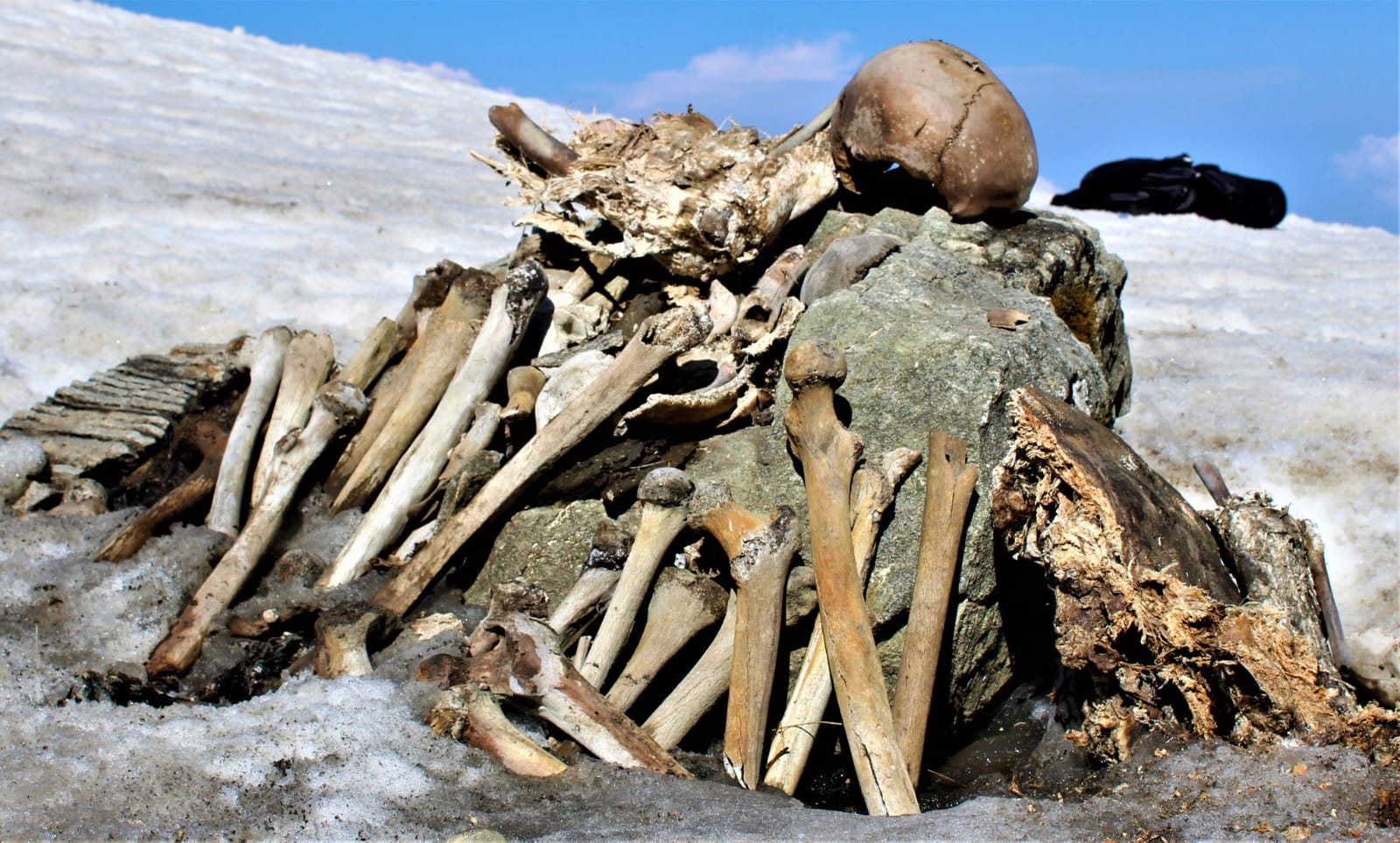
The Mystery of the Skeleton Lake
What caused the tragic fate of hundreds of people whose remains lie scattered around Roopkund Lake? Theories range from the tragic demise of General Zorawar Singh's army to the deadly impact of a massive hailstorm. Delve into the intriguing theories surrounding this historical enigma, from ancient battles to natural disasters.
Conquer the Great Himalayas
Encounter stunning vistas of iconic mountains like Trishul and Nanda Ghunti. Trek through lush meadows, dense forests, and snow-capped peaks. Challenge yourself and conquer the heights as you ascend towards Roopkund Lake.
A Trek through a Spiritual/Cultural Lens
Immerse yourself in the rich local folklore and mythology. Discover the legends associated with the lake, from Goddess Parvati's divine bath, whose battle with the demon Mahishasur is linked to the lake's creation, to the tragic tale of the King of Kanauj. Experience the spiritual aura of the region.
How difficult is the Roopkund Trek
The Roopkund Trek is categorized as a moderate to difficult trek. While it doesn't require advanced technical climbing skills, it does demand a reasonable level of physical fitness, endurance, and acclimatization. The initial stages of the trek through lush forests and meadows are relatively easy, allowing trekkers to acclimatize gradually. However, as you ascend towards higher altitudes, the terrain becomes more challenging. Steep climbs, rocky paths, and unpredictable weather conditions can test your limits. The final ascent to Roopkund Lake is particularly demanding, requiring a significant physical effort.
Best time to do this Roopkund Trek
A Spring Fling (May-June)—Spring is a beautiful time to embark on the Roopkund Trek. The snow begins to melt, revealing stunning alpine meadows in full bloom. The weather is generally pleasant, with clear skies and warm sunshine. However, be prepared for snow patches on the higher reaches, which can make the trek challenging. The Rise in the Fall (September-October) - Autumn is often considered the peak season for the Roopkund Trek. The monsoon has retreated, ensuring clear skies and dry trails. The landscape transforms into a vibrant palette of autumn colors. The snow at higher altitudes is manageable, and the overall trekking experience is more comfortable.
Why choose giritvaa for Roopkund Trek
Giritvaa is an ecotourism organisation renowned for organising sustainable treks in the Himalayan and Sahyadri ranges. We boast a team of skilled and seasoned trek guides who prioritise your safety. At Giritvaa, we're firm believers in the transformative power of trekking, helping our trekkers on their path of self-discovery!
Includes
Accommodation
There will be lodge or homestay accommodation at the base camp, and during the trekking, there'll be shared tents arrangement, ensuring safety throughout your journey.
All Inner Line Permits
We take care of all necessary forest department permissions for your trek, ensuring a smooth and legally compliant journey through the designated areas.
Safety gear
First aid, medical kits, oxygen cylinders, stretchers, etc., will be accessible at all campsites for handling emergencies.
Meals
Enjoy hygienic and nourishing meals prepared by our local cooks, providing the energy you need to tackle each day of your trekking adventure.
Transportation
We arrange transportation from the pickup point to the base camp and any necessary transfers during the trek, ensuring convenient access to the trekking routes.
Excludes
Personal Expenses
Any personal expenses are not included in the trek package.
Additional Cost
Any additional expenses, such as natural calamities and government restriction will not be covered in trek fees.
Meals during pick-up to base
The trek fee does not cover any meals or snacks you purchased during the journey from pick-up points to the base camp.
Important Note: Items Not Mentioned:
Anything not mentioned in the inclusion list will be considered as an exclusion from the package. We advise all trekkers to carefully review the inclusion and exclusion lists before booking your trek with us.
Things to Carry
Things to Carry
- Fleece
- Hat / Cap
- Poncho/Raincoat
- Sun glass
- Trekking shoes
- Woolen gloves
- Full Sleeves Tshirts
- Personal toiletries & Medicines
- Socks
- Trek pants
- Flip Flops / Slippers
- Personal expenses
- Scarf / Balaclava
- Tourch
- Waterbottle
- Down jacket
- Hiking pole
- Rucksack
- Thermal inners
- Valid id proof
Frequently Asked Questions for Roopkund Trek
Is offloading available on the trek?
We offer the choice of offloading on this trek. However, we encourage trekkers to carry backpacks and focus on improving their fitness. Having excessive mules on a trail can negatively impact the ecosystem.
What is the maximum altitude reached during the Roopkund Trek?
The maximum altitude reached during the Roopkund Trek is approximately 15,500 feet.
What is the accommodation like during the Roopkund Trek?
Accommodation during the Roopkund Trek primarily consists of tents, providing a camping experience amidst nature.
Do I need to have prior trekking experience to go for the Roopkund Trek?
While prior trekking experience is beneficial, it is not strictly mandatory. However, a good level of physical fitness is essential.
Is it necessary to take a guide for the Roopkund Trek?
It is highly recommended to hire an experienced guide for the Roopkund Trek. They possess in-depth knowledge of the terrain, weather conditions, and emergency procedures, ensuring a safe and enjoyable experience.
Why should you do the Roopkund Trek?
The Roopkund Trek offers a unique blend of adventure, mystery, and natural beauty. It's a chance to challenge yourself physically, immerse yourself in the stunning Himalayan landscape, and unravel the intriguing history of Skeleton Lake.
What is the best time to do the Roopkund Trek?
The ideal times for the Roopkund Trek are Spring (May-June) and Autumn (September-October). Spring offers blooming meadows and pleasant weather, while autumn presents clear skies and vibrant foliage.
How difficult is the Roopkund Trek?
The Roopkund Trek is categorized as moderate to difficult. While it doesn't require technical climbing skills, it demands a good level of physical fitness, endurance, and acclimatization. The higher altitudes and challenging terrain can be demanding.
Is Roopkund Trek prohibited?
No, the Roopkund Trek is not prohibited. However, overnight camping in the Bugyals (meadows) of Uttarakhand is restricted.
What is the best way to reach the starting point of the Roopkund Trek?
The nearest railway station is Kathgodam, from where you can hire a taxi to reach the starting point.
What should I pack for the Roopkund Trek?
Essential items include sturdy trekking shoes, warm clothing, waterproof gear, a backpack, water bottle, sunscreen, sunglasses, and a first-aid kit.
Do I need a permit for the Roopkund Trek?
Yes, permits are required for trekking in the region. It's best to book through a registered tour operator who will handle the permits.
Is it safe to do the Roopkund Trek alone?
It's advisable to go with a group or a registered guide due to the challenging terrain and unpredictable weather conditions.
What is the average cost of the Roopkund Trek?
The cost varies depending on the package, but it typically ranges from INR 12,000 to INR 20,000 per person.
How to reach the base camp of Roopkund Trek
You can either book a train ticket to Haridwar railway station or book a flight to Dehradun. Once you arrive at either destination, we'll arrange for a drive to Wan village, which is about 287 km away. The journey generally takes around 9 to 10 hours. Please Note: You should book your ticket at least one day in advance. For instance, if your trek is scheduled from March 22nd to March 27th, make sure to book your Haridwar ticket for March 21st. Leaving an extra day ensures a smoother journey.
Loading planning guides...
Loading related treks...